Gas Line Inspections in Corona
Trusted gas line inspections in Corona and surrounding areas. Licensed and insured plumbing and HVAC pros, upfront pricing, free estimates. Call (951) 344-5596.
If a pilot light won’t stay lit, your gas bill jumped without an obvious reason, or you’ve caught a faint rotten-egg smell near the meter that comes and goes, the line feeding your appliances may have a problem that isn’t visible from the outside. Corona’s older neighborhoods, especially homes built before the 1980s, often still run on black iron gas pipe that corrodes from the inside out long before a leak becomes obvious at the surface. A proper inspection finds that kind of problem while it’s still a repair, not an emergency.
What Gas Line Inspections actually involves
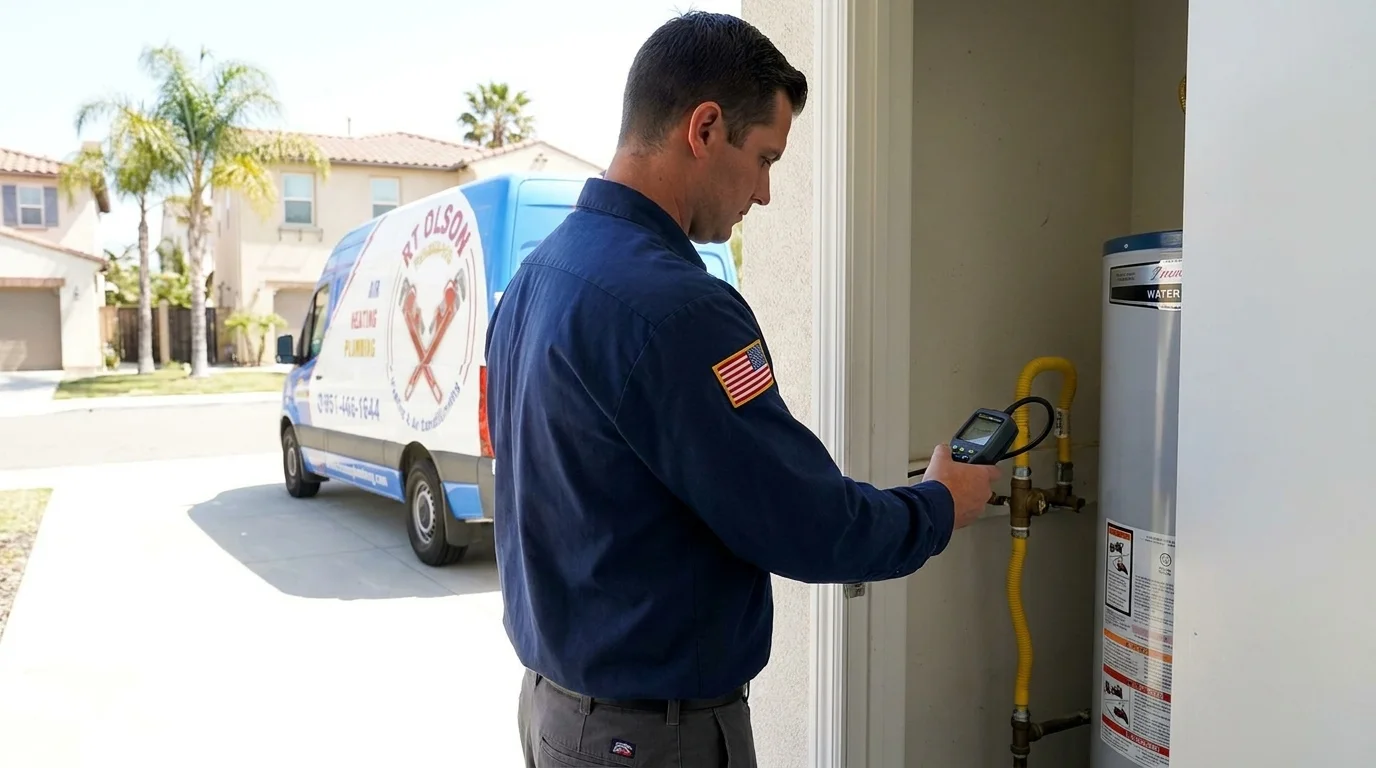
A gas line inspection checks the full path from the meter to each appliance: the shutoff valve, the main distribution line, every tee and union, flex connectors at the water heater, furnace, range, and dryer, and the venting setup for any appliance that burns gas. Our technicians use a combustible gas detector and a manometer to check static and working pressure, and we pressure-test sections of line where corrosion or an undersized fitting is suspected. Most inspections on a typical single-family home in Corona take about an hour to ninety minutes, longer if the home has had additions or appliance upgrades that weren’t pulled through permitting.
If we find an active leak during the inspection, we stop and have you contact SoCalGas’s emergency line immediately. We don’t attempt to diagnose or repair an active leak on the spot. Our job on the inspection side is to find the slow problems, the ones that haven’t announced themselves yet, so they get fixed on your schedule instead of the gas company’s.
Our process
- Visual trace of the full line. We follow the gas line from the meter through the attic, crawlspace, or slab penetration points to every appliance, checking pipe material, joint condition, and support brackets along the way.
- Pressure and leak testing. We isolate sections of line and check them against code-required pressure drop standards, using soap-bubble testing at joints and a calibrated detector at suspect fittings.
- Appliance connection check. Each gas appliance gets its connector, shutoff valve, and sediment trap inspected individually. This is where we most often find outdated flex connectors or missing traps from past DIY work.
- Code compliance review. We flag anything that doesn’t meet current code: unsupported runs, improper transitions between pipe materials, or line sizing that’s too small for the appliance load it’s feeding.
- Written report and recommendations. You get a documented summary of findings, including photos of any problem areas, so you know exactly what (if anything) needs follow-up work and why.
What separates a good gas line inspection from a bad one
A rushed inspection checks for obvious leaks and calls it done. A thorough one accounts for load. Adding a tankless water heater or a pool heater to a line that was sized for the original appliances is one of the most common issues we find in Corona homes that have been remodeled over the years, and it won’t show up on a simple leak check because the line isn’t leaking, it’s just undersized for what’s now pulling from it.
Corrosion at black iron joints is another spot that gets missed when an inspector only checks exposed sections. Pipe that runs through a slab or behind finished walls needs a pressure test, not just a visual look, because corrosion from the inside doesn’t show until it’s already failed. We also check for unpermitted connections, which matter both for safety and for real estate transactions, since an uninspected gas appliance hookup can hold up escrow.
What does Gas Line Inspections cost?
Costs vary with the size of the home, the number of appliances on the line, and whether pressure testing on enclosed sections is needed. Every inspection ends with a written report and, if repairs are recommended, a separate written scope and price before any work starts. Homeowners insurance generally doesn’t cover routine inspections, but it may cover damage caused by a sudden, accidental gas-related failure, so it’s worth checking your policy if the inspection was prompted by a specific incident.
| Scenario | Typical range |
|---|---|
| Standard single-family home inspection | $150 - $350 |
| Pre-sale/real estate inspection | $200 - $400 |
| Multi-appliance connection check | $100 - $250 |
| Pressure test on enclosed/slab sections | $250 - $600 |
| Follow-up after suspected leak (no active emergency) | $150 - $350 |
Seasonal & regional considerations
Gas demand climbs in the Inland Empire during the winter heating months when furnaces and water heaters run harder, which is also when minor pressure issues and marginal connections tend to surface. Corona’s housing stock spans everything from 1950s ranch homes with original black iron piping to newer construction with CSST (corrugated stainless steel tubing), and each material ages differently, so an inspection approach that works for one isn’t automatically right for the other.
Service area
We perform gas line inspections throughout Corona and surrounding communities including Eastvale, Norco, Riverside, and the surrounding Inland Empire.
If something about your gas appliances or your utility bill has felt off, don’t wait for it to become a bigger problem. Call (951) 344-5596 to schedule a gas line inspection and get a written report on exactly what’s going on with your line.
Services We Handle
- Gas Line Repair & Installation
- Gas Line Replacement
Frequently Asked Questions
Does homeowners insurance cover gas line inspections?
What are the warning signs that I need a gas line inspection?
What should I do if I smell gas right now?
Why would a gas line need pressure testing instead of just a visual check?
Can adding a new gas appliance cause problems even if the line isn't leaking?
Looking for the best gas line inspections company in Corona?
RT Olson Plumbing, Heating and Air Conditioning provides licensed and insured gas line inspections in Corona, CA and the surrounding area, and has served local property owners since 2014. Customers rate us 4.9 out of 5 stars across 615 Google reviews. We answer calls 24/7 — call (951) 344-5596 for immediate help.
Need Gas Line Inspections now?
We respond 24/7 across Corona and surrounding CA cities.
Related Coverage
- Our Plumbing Services, Plus Heating & Air
- Contact RT Olson Plumbing, Heating and Air Conditioning
- Plumbing, Heating and Air in Anaheim
- Plumbing, Heating and Air in Bloomington
- Plumbing, Heating and Air in Canyon Lake
- Plumbing, Heating and Air in Chino
- Plumbing, Heating and Air in Chino Hills
- Plumbing, Heating and Air in Claremont
- Plumbing, Heating and Air in Diamond Bar
- Plumbing, Heating and Air in Eastvale
- Plumbing, Heating and Air in Fontana
- Plumbing, Heating and Air in French Valley
- Plumbing, Heating and Air in Fullerton
- Plumbing, Heating and Air in Hemet