TL;DR: A cold shower with hot water everywhere else usually points to a worn shower valve cartridge, not the water heater. If every fixture in the house runs cold, the problem is almost always the water heater itself: a dead pilot light, a failed heating element, a tripped high-limit switch, or a tank so full of sediment it can’t hold heat. Isolating which one you have takes about two minutes and decides whether you need a shower cartridge swap or a water heater repair.
If you just stepped out of a cold shower in your Corona home while the kitchen sink still runs hot, you don’t have a water heater problem. You have a shower valve problem, and it’s a much smaller fix than it feels like right now. If the whole house is cold, keep reading, because the cause and the fix are different.
Why is there no hot water in the shower?
When hot water is missing everywhere in the house, not just the shower, the water heater itself is almost always the cause. The usual suspects are a pilot light that’s gone out on a gas unit, a failed heating element or tripped high-limit switch on an electric unit, a broken thermostat, or a tank so loaded with sediment it can’t transfer heat efficiently anymore.
Age matters here too. Tank water heaters typically last around 10 to 15 years, and a unit past year 10 that suddenly can’t keep up is often nearing the end of its service life rather than suffering a one-off part failure. If you can see the manufacture date on the data plate and it’s past year 10, factor that into whether a repair is worth it.
One safety note on gas units: if you smell gas anywhere near the water heater, don’t attempt to relight the pilot yourself. Leave the house, call 911 or your gas utility’s emergency line from outside, and only bring in a licensed plumber once the utility has confirmed the area is safe.
Could it be the shower valve instead of the water heater?
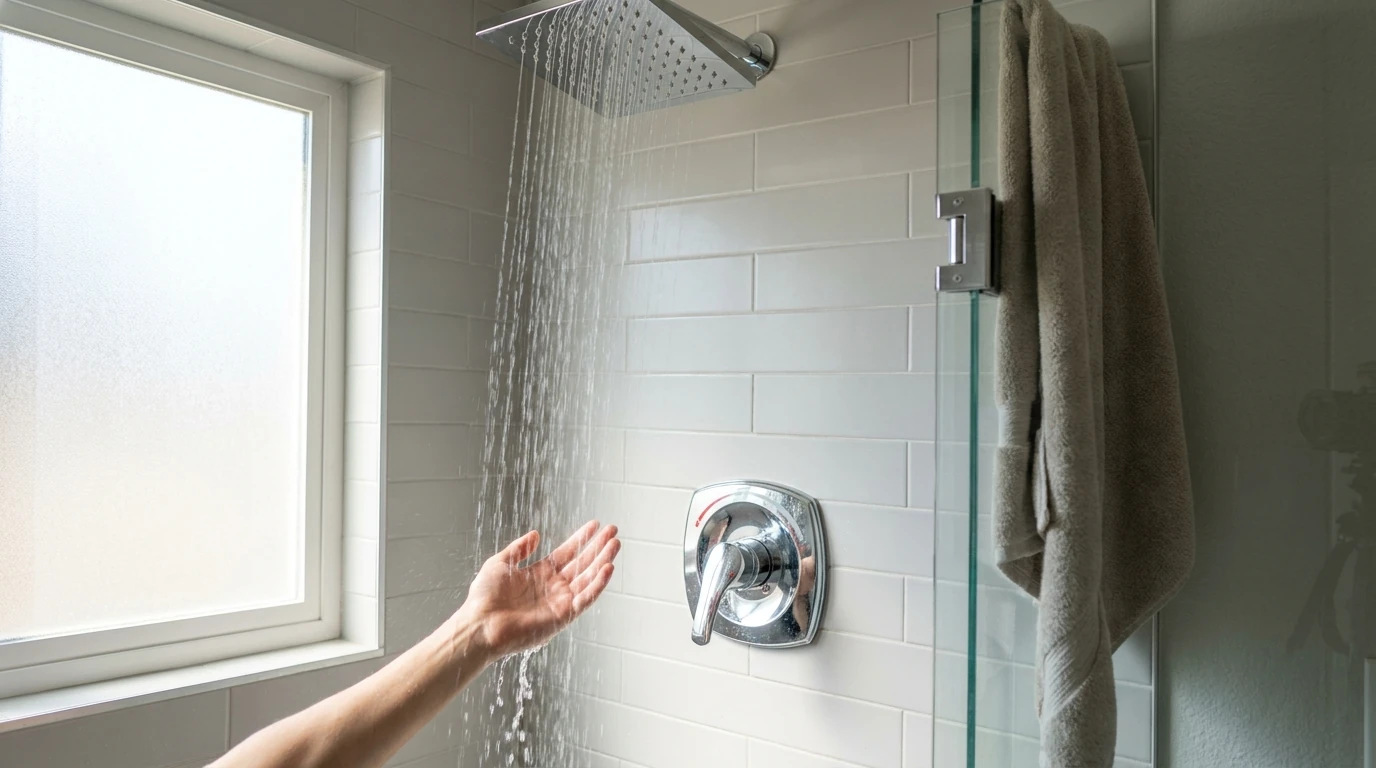
If hot water works fine at every other fixture but the shower, the shower’s mixing valve or cartridge is almost certainly the problem, not the water heater. The cartridge inside a single-handle shower valve blends hot and cold water, and mineral deposits or worn seals can block the hot side specifically while leaving cold flow untouched.
This shows up as one of three patterns: only cold water comes out no matter how far you turn the handle, the temperature swings unpredictably, or you need to crank the handle much further toward hot than you used to. All three point to the cartridge, and it’s a common failure in older homes and homes with hard water, since mineral scale builds up inside the valve body over years of use.
Replacing a shower cartridge is a real DIY job, often under an hour, if you’re comfortable shutting off your home’s main water supply and working with an Allen key and a screwdriver. If the valve body itself is corroded or the cartridge isn’t a standard swap, that’s when it becomes a plumber’s job rather than a Saturday project.
How do you replace a single-handle shower cartridge?
These steps are for a single-handle shower valve. Handles and cartridges vary by brand, so take the old cartridge (or the model sticker often found on its front) to the hardware store to buy the right replacement. You’ll need the replacement parts, Allen keys, a screwdriver that fits the screws on your handle, and a washcloth to set parts on so nothing gets lost or scratched.
- Shut off the water. The simplest way is to close your home’s main water shutoff so nothing sprays when the handle comes off.
- Drain the valve. Turn the shower on to let the remaining water drain out, then turn it back off.
- Remove the handle. Most single-handle showers use screws, set screws, or both. There is usually a set screw on the underside of the handle: loosen it with an Allen key and slide the handle off.
- Remove the stopper ring and center screw. A rotation stopper ring sits over a grooved center screw. The stopper ring limits how hot the shower gets. Slip it off, then remove the center screw.
- Remove the threaded ring and backplate. A metal ring with internal threads holds the backplate against the wall. Turn it counterclockwise to remove it, then take off the backplate.
- Remove the cartridge bracket. Take out the four screws at the corners of the metal bracket holding the cartridge, and slide off the bracket’s front plate.
- Pull the old cartridge. Grip it firmly and wiggle it as you pull it out. Check that the two rubber seals on the back came out with it; if not, remove them from the wall. Clean out any debris before installing the new one.
- Install the new cartridge. Line up the screw holes with the wall bracket, slide the cartridge in, refit the faceplate, and snug the four screws without overtightening.
- Reinstall the backplate. Hold it against the wall with the gap in its seal facing down so any water drains into the shower, then thread the ring back on by hand.
- Finish up. Refasten the center screw with its groove facing down, without overtightening. Slip the stopper ring back on and set it to your preference, then put the handle back on and tighten the set screw. Turn the water back on and test.
Why does hot water run out fast or never get fully hot?
Hot water that runs out quickly or never quite reaches temperature usually means the tank’s capacity, recovery rate, or heating efficiency can’t keep up with what the household is asking of it. There are two separate causes, and they produce slightly different symptoms.
The first is demand simply outpacing supply: a shower running at the same time as the dishwasher and a load of laundry pulls from the same tank, and a standard 40- or 50-gallon unit can run out or deliver lukewarm water under that load. If this started right after a new appliance went in or the household grew, that’s your answer.
The second is sediment. Minerals in the water supply settle to the bottom of the tank over time, insulating the burner or lower heating element from the water above it. This reduces how fast the tank heats, how hot it gets, and how long the tank itself lasts. Southern California’s hard water makes this common, and tanks that have never been flushed often show exactly this symptom: water that’s warm but never actually hot. Flushing the tank once a year clears it out and is one of the cheapest ways to extend a water heater’s life. Our guide on how to drain a water heater walks through it, and we cover the bigger picture in how long water heaters last.
How do you troubleshoot it before calling anyone?
Two minutes of checking tells you whether this is a shower valve issue or a water heater issue, and that determines who you need and what it costs. Start here:
- Check power to the water heater: a tripped breaker on an electric unit, or an extinguished pilot light on a gas unit.
- Run hot water at the kitchen or bathroom sink. If it’s hot there and cold only in the shower, it’s the valve.
- If every fixture is lukewarm or cold, the water heater is the problem, not the shower.
- Note whether the temperature fluctuates (points to thermostat or sediment) or never warms at all (points to a dead pilot or failed element).
That single test, hot water at the sink versus the shower, is the fastest way to rule out half the possible causes.
Repair or replace: how do you decide?
A water heater under 10 years old with a single part failure is usually worth repairing; a unit past 10 to 12 years with repeat problems is usually worth replacing. Here’s the breakdown:
| Factor | Repair usually makes sense | Replacement usually makes sense |
|---|---|---|
| Age | Under 10 years | 10 to 15+ years |
| Symptom pattern | One part failure (thermostat, element, pilot assembly) | Repeat failures, or this is the second repair in two years |
| Performance | Temperature is stable, just not reaching the shower reliably | Water never gets fully hot, or runs out in minutes |
If you’re on the replacement side of that table, it’s also worth comparing tankless vs tank water heaters before you commit, since a correctly sized tankless unit heats water on demand instead of storing a fixed amount, which addresses the “ran out mid-shower” problem. See what size tankless water heater you need.
When is it time to call a plumber?
Call a plumber once the two-minute test points to the water heater itself, or once a shower valve repair turns out to need more than a cartridge swap. Tank issues like a failed heating element, a gas control valve, or a tank old enough to be a replacement candidate aren’t safe or cost-effective DIY territory, since they involve gas lines, electrical circuits, or pressurized connections.
RT Olson Plumbing, Heating and Air Conditioning diagnoses and repairs water heaters across Corona and the surrounding Inland Empire, and handles both tank and tankless installations when a unit is past the point of repair. You can see the full scope on our water heater repair page, and shower valve problems are covered under faucet and fixture repair.
A cold shower is annoying, not an emergency, so there’s no need to panic. Run the sink test, note what you find, and you’ll already know roughly what kind of appointment you need before you pick up the phone.
About RT Olson Plumbing, Heating and Air Conditioning
RT Olson Plumbing, Heating and Air Conditioning has served Corona, CA and the surrounding Inland Empire since 2014, holding California contractor license #997337 (verify any contractor’s license at cslb.ca.gov). The company offers 24/7 service and holds a 4.9-star Google rating across more than 600 reviews. This guide first ran on RT Olson’s previous website and was updated for Corona homeowners in October 2026.
Need help now? Call RT Olson Plumbing, Heating and Air Conditioning at (951) 344-5596.