TL;DR: Tankless water heater size is measured in gallons per minute (GPM), not tank capacity, and it depends on two things: how many fixtures run hot water at once and how much your incoming groundwater needs to warm up to reach 120°F. A typical family of four lands around 10 to 12 GPM, which covers a shower, dishwasher, and washing machine running at once with some headroom. Oversizing wastes money upfront; undersizing means cold showers when the dishwasher and washing machine are both running.
If you’re standing in your garage trying to decide between a 7 GPM and an 11 GPM tankless unit before a plumber shows up to quote the installation, the number that matters most is not how many people live in your house. It’s how many hot water fixtures you realistically run at the same time, and how cold your water is before the unit has to heat it. Get those two numbers right and the rest of the decision is simple math.
How does a tankless water heater work?
A traditional tank heater keeps a large reservoir of water hot around the clock. The water cools as it sits, so the burner or element keeps cycling to hold temperature, and once the tank is drained you wait for it to recover.
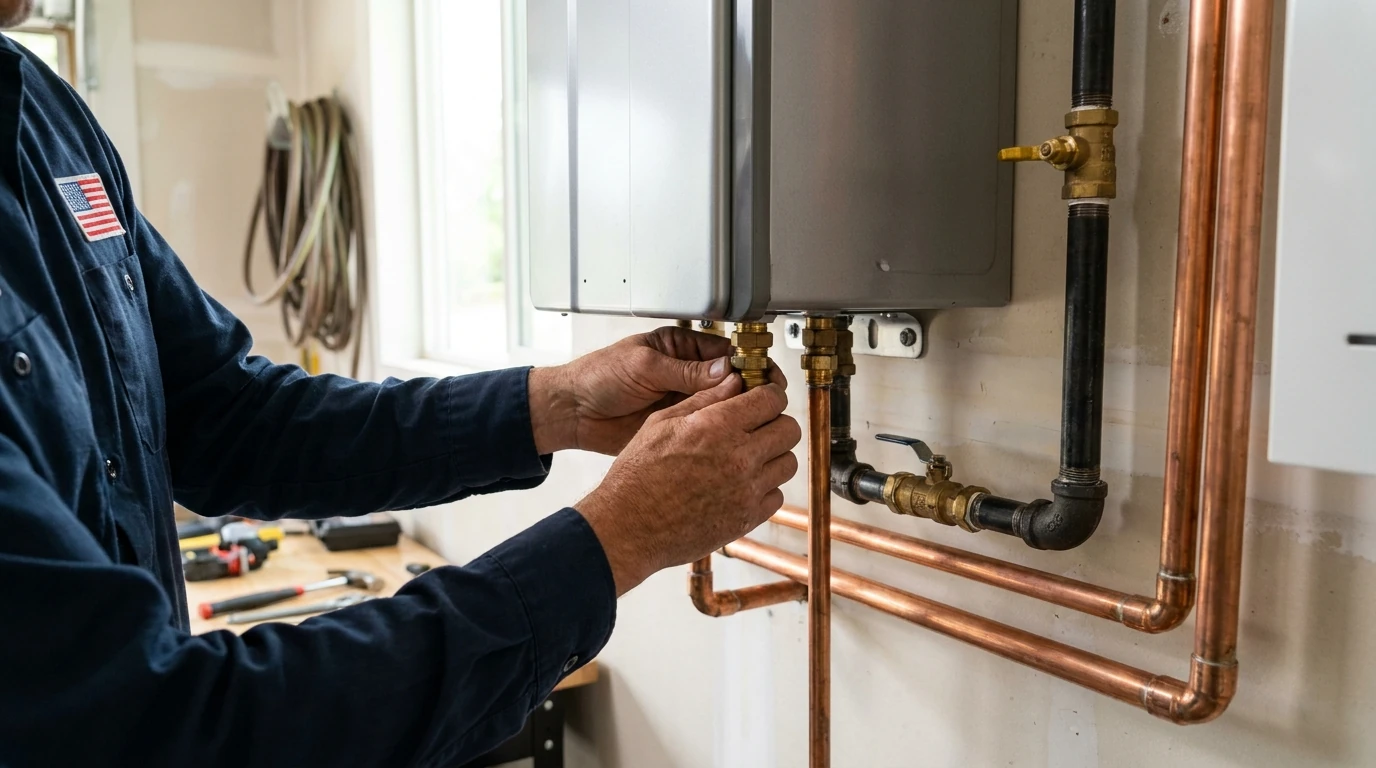
A tankless unit heats water only when you open a hot tap. A flow sensor tells the control board to fire the gas burner or electric element as water passes through, and a temperature sensor adjusts the output to hit your set point. That is why tankless units are more energy efficient and why they can deliver a nearly endless supply of hot water, as long as the unit is sized for how much you use at once.
How do I size a tankless water heater for my home?
Sizing a tankless water heater means matching its maximum flow rate (GPM) and temperature rise capacity to your household’s peak hot water demand, not just counting bedrooms. Every tankless unit has a GPM rating, but that number changes depending on how much the incoming water needs to be heated.
Three factors drive the calculation: the number of fixtures that might run hot water simultaneously, the combined flow rate of those fixtures in gallons per minute, and the temperature rise needed to get cold tap water up to a comfortable 120°F. Manufacturers publish a chart for every tankless model showing how its GPM output drops as the required temperature rise goes up. The larger the rise, the fewer gallons per minute the same unit can deliver. That’s the number most people miss when they shop by the headline GPM figure alone.
Where you live matters because incoming water temperature varies by region and season. Winter groundwater in Minnesota is far colder than summer groundwater in Texas, so a home in a colder climate needs a bigger temperature rise, and often a bigger unit, to serve the same fixtures. Your plumber should size for your coldest realistic incoming water, not an average day.
What size tankless water heater do I need for a family of four?
A family of four typically needs a tankless unit in the range of 10 to 12 GPM. That covers a realistic busy-morning load, with room for an extra faucet or a colder-than-usual day. Start with the larger of two numbers: how many people live in the home now, or how many the home’s square footage would typically house.
To get there yourself, add up the flow rate of every fixture that’s likely to run at the same time during a busy morning:
- One shower: about 3 GPM
- A high-efficiency dishwasher: about 1.5 GPM
- A standard washing machine: about 2.5 GPM
Together that is 7 GPM of simultaneous demand. Check the actual ratings on your own fixtures, since newer showerheads and appliances often use less. A unit in the 10 to 12 GPM range covers that 7 GPM load with room for someone to open a faucet at the same time.
Future plans matter here too. If it’s currently just two adults but kids are on the way, sizing for the eventual four-person household from the start avoids a replacement conversation five years later.
Should I oversize my tankless water heater?
Oversizing a tankless water heater isn’t automatically wrong, but it comes with real tradeoffs in upfront cost and installation complexity that should match an actual reason, not just a cushion “to be safe.”
The case against going bigger than you need is straightforward. A larger unit costs more to buy and more to install, since bigger units often need larger gas lines and venting to supply the higher burner output. They don’t save energy by running at a lower load either; a tankless unit modulates to the demand in front of it, so extra capacity mostly sits unused rather than wasted, but you still paid for it.
The case for sizing up is specific, not general. If your household is still growing (babies become teenagers who take long showers, and in-laws move in), if you live somewhere with genuinely cold winter groundwater, or if you’re planning to sell within a few years and future buyers may have bigger families, a modest step up in size can make sense. What doesn’t make sense is doubling your GPM rating on the theory that bigger is always safer. A written quote from a licensed plumber should walk through your actual fixture count before recommending a size, not just upsell the largest model in the lineup.
What is the downside of a tankless water heater?
The main downsides of a tankless water heater are a higher upfront cost, a flow rate ceiling that can be exceeded by too many fixtures running at once, and in some homes, the need for new gas lines, venting, or a water softener to keep it running efficiently.
A few specifics worth knowing before you buy:
- Upfront cost is higher than a tank unit. Tankless units and their installation typically run more than a comparable tank water heater, partly because of the unit itself and partly because of any gas line or venting upgrades required.
- Flow rate has a ceiling. Run a shower, a dishwasher, and two sinks at once in a house sized for 8 GPM, and the unit will throttle or run cooler water rather than magically producing more hot water. Sizing correctly up front is the fix, not a workaround after the fact.
- Hard water needs attention. Depending on your water, you may need a water softener or other treatment so mineral scale doesn’t build up inside the tankless heat exchanger. A water softener or filtration system protects the unit and keeps it running at rated efficiency. We cover this tradeoff in more detail in our tankless vs tank water heater comparison.
- Gas line and venting changes are common. Many homes built before high-efficiency tankless units became standard don’t have the gas line capacity or venting configuration a tankless unit needs. That’s a real line item to ask about in a quote, not an afterthought.
- Annual maintenance is part of the deal. Tankless units need periodic descaling, usually an annual flush with a descaling solution through the service valves, to clear mineral buildup and protect the manufacturer’s efficiency rating and warranty.
None of these are reasons to avoid tankless altogether. They’re reasons to get the sizing and the installation scope right from the first conversation.
When should I call a plumber instead of sizing it myself?
Call a licensed plumber once you’ve narrowed down a rough GPM range, so they can confirm your fixture count, your home’s actual gas line and venting capacity, and your water hardness before finalizing a unit and a quote. The math above gets you in the right neighborhood; a site visit confirms the details that change the price.
A proper quote should include the unit’s GPM rating at your local temperature rise, any gas line or vent upsizing required, whether a water softener is recommended, and the manufacturer’s warranty terms in writing. If a quote skips any of those, ask why before signing.
Gas utilities sometimes offer rebates on qualifying ENERGY STAR certified tankless models. Amounts and availability change, so confirm current offers with your gas utility directly rather than relying on a number from an old flyer.
If you’re weighing tank versus tankless or trying to land on the right GPM rating, RT Olson Plumbing, Heating and Air Conditioning can walk the fixture count and gas line scope on site and put the sizing in writing before any work starts. Request a tankless water heater installation quote to get specifics for your address rather than a general range.
Getting the size right the first time avoids two expensive mistakes: a unit that can’t keep up on a busy morning, and one that cost more than your household ever needed. Either way, the answer starts with your actual fixture list, not a guess based on bedroom count.
About RT Olson Plumbing, Heating and Air Conditioning
RT Olson Plumbing, Heating and Air Conditioning has served Corona, CA and the surrounding Inland Empire since 2014, holding California contractor license #997337 (verify any contractor’s license at cslb.ca.gov). The company offers 24/7 service and holds a 4.9-star Google rating across more than 600 reviews. This guide first ran on RT Olson’s previous website and was updated for Corona homeowners in October 2026.
Need help now? Call RT Olson Plumbing, Heating and Air Conditioning at (951) 344-5596.