A slab leak is a break or pinhole in the water lines running beneath your home’s concrete foundation. Left alone, it can silently erode the soil under your slab, drive up your water bill, and invite mold into places you can’t see. The tricky part is that the leak itself is buried, so your first clues are almost always indirect. Here is what a slab leak is, what causes one, seven warning signs to watch for, and the steps to take before a plumber arrives.
What Is a Slab Leak?
A slab leak is a water leak in a plumbing pipe that runs through or under your home’s concrete foundation. Because the pipe is encased in or buried beneath concrete, you usually cannot see the leak itself, only its effects: water, warmth, sound, or a meter that keeps moving.
What causes a slab leak?
- Pipe age and corrosion
- Cracks or movement in the foundation
- Poor original installation
- Corrosion from the surrounding soil or concrete
- Hard water mineral buildup and high water pressure
Hard water deserves a special mention. Mineral scale corrodes pipe from the inside and adds stress to the line, so homes with hard water tend to see slab leaks sooner and more often. If you see the classic hard water signs, limescale on faucets and soap scum on shower doors, tile, and tubs, it is worth testing your water and, if needed, adding a softener or conditioner to extend the life of your pipes and appliances.
How serious is a slab leak?
Any water leak is serious, and a slab leak can do extensive damage because it runs out of sight. Left unchecked, the escaping water can also shift the soil under the slab and move the foundation. If you see or suspect a leak, turn off the water to the house and call a plumber who specializes in leak detection.
The 7 Warning Signs
1. Your Water Bill Jumps Without Explanation
A sudden increase in your monthly water bill, especially during a stretch where your habits haven’t changed, is often the first measurable signal. A pressurized pipe leaking beneath the slab can lose a lot of water without ever producing a puddle you can see. Pull up two or three months of bills and compare them. If usage climbed noticeably and you haven’t added irrigation or a new appliance, treat it as a red flag.
2. You Hear Running Water When Everything Is Off
Stand near your water meter or in a quiet hallway and listen. A faint rushing or hissing sound, particularly at night when the house is still, can indicate water moving through a damaged line under the slab. You can do a quick confirmation: turn off every faucet, appliance, and valve in the house, then watch your water meter. If the dial or digital readout keeps moving, water is escaping somewhere.
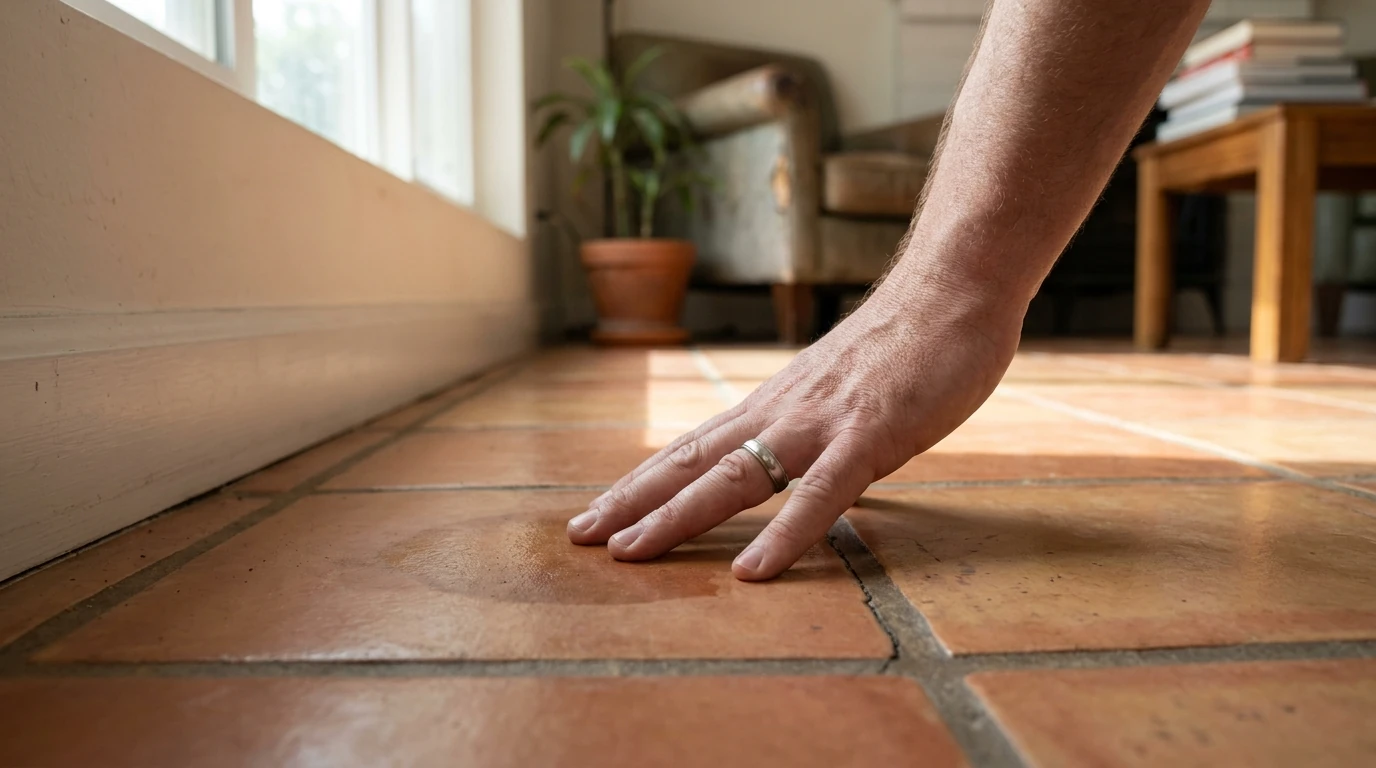
3. There Are Hot Spots on Your Floor
This one is specific to hot-water line leaks. When a hot-water supply pipe cracks beneath the slab, the heated water seeps into the concrete and radiates upward. Walk barefoot across your tile or hardwood on a cool morning. A patch of floor that feels noticeably warmer than the surrounding area, not near a heating vent, is worth taking seriously.
4. Cracks Appear in Your Flooring or Baseboards
Concrete is rigid, but sustained moisture underneath it causes the soil to shift. That movement telegraphs upward as hairline cracks in tile grout, warped wood planks, or separating baseboards. A single crack near a doorway or expansion joint isn’t necessarily alarming, but multiple new cracks appearing over a few weeks, especially paired with any other sign on this list, point toward foundation movement from water intrusion.
5. Damp or Warm Carpet With No Obvious Source
If a section of carpet feels damp or spongy underfoot and there’s no plumbing fixture directly above it, the moisture is likely wicking up through the slab. Carpet rarely stays damp from indoor humidity alone. Press a dry paper towel firmly into the carpet pile. If it comes up with visible moisture, the source is below, not above.
6. Mold or Mildew Smell at Floor Level
Mold needs three things: moisture, warmth, and an organic surface. A slab leak delivers the first two directly to the subfloor, carpet backing, or drywall base, all of which qualify as the third. If you notice a musty odor concentrated near the floor rather than near a bathroom or laundry area, and you can’t find a visible source, a slab leak may already be feeding mold growth you can’t see yet.
7. Low Water Pressure Throughout the House
A significant pipe breach under the slab bleeds pressure from the entire system. If multiple fixtures, not just one faucet, are delivering noticeably weaker flow than usual, and your neighbors aren’t reporting a main-line issue, the pressure loss may be happening below your foundation. This symptom tends to appear later in the leak’s progression, once the break has widened.
What To Do Right Now
If you recognize two or more of these signs, take these steps before calling for help:
- Locate your home’s shutoff valve. It is usually where the main water pipe enters the house, often near a hose bib at the front or side of the home. Turn the handle so it sits at a 90 degree angle to the pipe (or turn a round wheel clockwise until it stops). Leave the valve at the street meter alone: many water districts do not allow homeowners to operate it. Our guide to what to do when a pipe bursts walks through the shutoff in more detail.
- Do the meter test. Before shutting off, note your meter reading. After shutting off all interior valves, check again in 15 minutes. Movement confirms an active leak somewhere in the system.
- Document what you’re seeing. Take photos or short videos of damp carpet, warm floor spots, cracks, or stains. This record is useful for both the plumber and your homeowner’s insurance claim.
- Don’t run water unnecessarily. Every gallon you push through the system while the line is compromised adds pressure to the break and more water to the soil beneath your slab.
- Move valuables off affected flooring. Moisture wicking through a slab can spread laterally. Rugs, furniture, and stored items near the damp zone are at risk.
What NOT To Do
- Don’t attempt to jackhammer or chip the slab yourself. Post-tension slabs contain steel cables under tension. Cutting into one without knowing its location can be dangerous and cause structural damage that dwarfs the original leak repair.
- Don’t ignore it hoping it resolves. Slab leaks don’t seal themselves. The longer pressurized water contacts soil, the more the ground shifts, and foundation repairs cost significantly more than pipe repairs.
- Don’t assume the meter test rules it out. A very slow leak may not move the meter noticeably in 15 minutes. A clean meter test is reassuring but not conclusive if you still have multiple symptoms.
When To Call a Professional
Call a licensed plumber who offers electronic leak detection as soon as you’ve confirmed or strongly suspect a slab leak. Modern leak detection uses ultrasonic or acoustic listening equipment, infrared cameras that show the temperature change in the floor, and pressure testing to pinpoint the break, without opening the slab unnecessarily. Once the leak is found, the plumber caps it and walks you through the repair options for that line. This matters because repair options vary widely depending on location:
- Direct access (spot repair): The plumber opens the slab directly above the break. Best when the leak is isolated and the pipe is otherwise in good condition.
- Rerouting: A new line is run up through the walls and across the attic or crawl space, bypassing the slab entirely. Often the right call when continuous flooring (wood, tile, or laminate) sits over the leak and a spot repair would mean replacing far more flooring than the leak itself, or when the original piping is aging and prone to future leaks.
- Epoxy pipe lining: In some cases, a resin liner can be applied from the inside of the pipe, sealing the break without excavation.
The right method depends on your pipe material, slab type, the flooring over the leak, and how much of the system is affected. That assessment requires someone on-site with the right equipment, not a phone estimate.
Will Insurance Help Pay for a Slab Leak?
Often, at least in part, but coverage varies by policy and insurer. If there is water damage, file a water damage claim with your homeowner’s insurance. Many claims are handled in stages:
- Leak detection: finding the leak and capping it. Once it is capped, stop and call your insurance company before any further repairs or removal of materials.
- Water damage mitigation: removing wet materials, testing for asbestos and mold where needed, and drying out the area. This is work for a water damage restoration company.
- Restoration: putting the home back the way it was, including drywall, paint, flooring, and cabinets. Your deductible usually applies here.
Damaged personal property is sometimes covered, usually with limits. Read your policy and document everything with photos before work begins.
RT Olson Plumbing, Heating and Air Conditioning offers leak detection and slab leak and pipe repair for Corona-area homeowners. If you’re seeing these signs, call (951) 344-5596 to schedule a diagnostic before the situation worsens.