
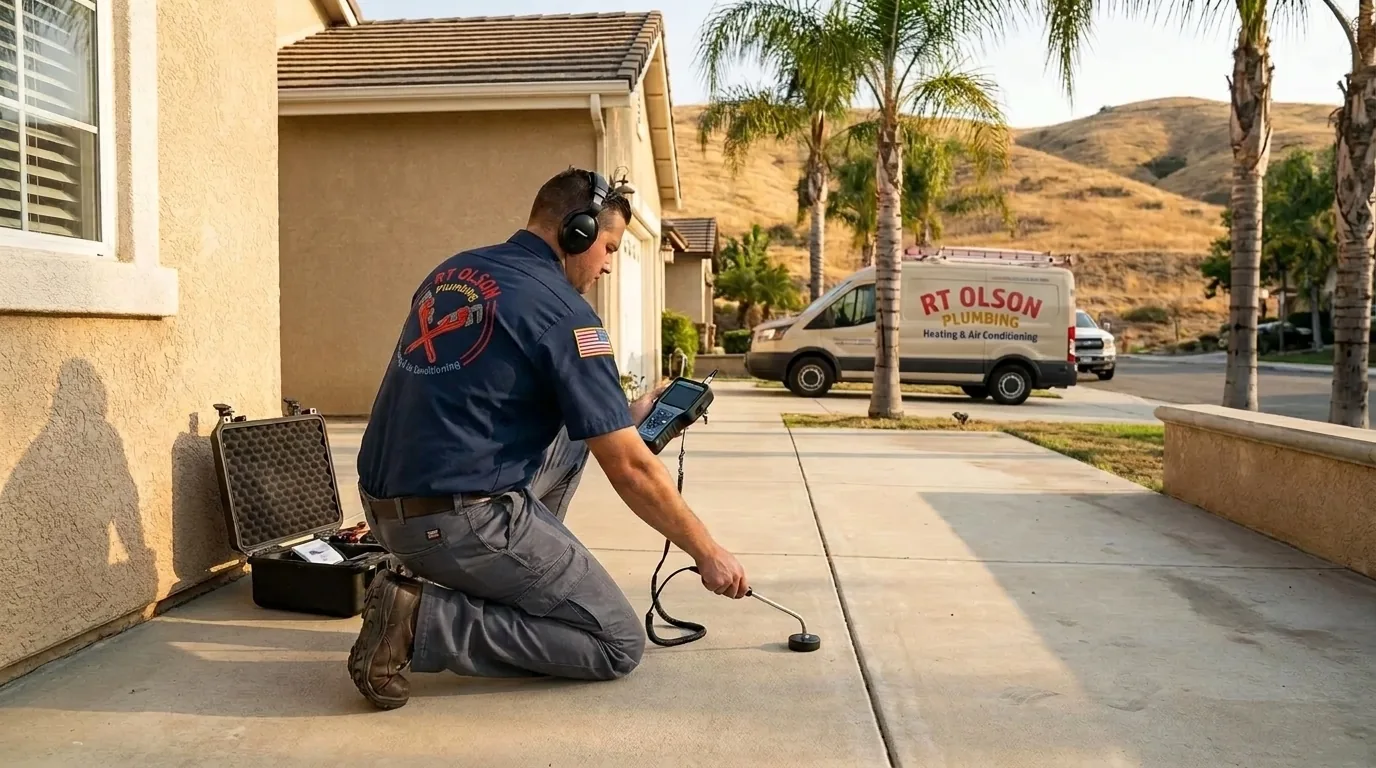
Leak Detection in Corona
Trusted leak detection in Corona and surrounding areas. Licensed and insured plumbing and HVAC pros, upfront pricing, free estimates. Call (951) 344-5596.
Your water bill jumped $80 last month and nothing obvious has changed, no extra laundry, no guests, no irrigation blowouts. That gap between what you’re using and what the meter says you’re using is exactly what leak detection is designed to close. Hidden leaks inside walls, beneath concrete slabs, or underground along your service line can run for weeks before they show up as a stain, a soft spot in the floor, or a number on a bill. Finding the source without tearing apart your home takes the right equipment and someone who knows how to read what it tells them.
What leak detection actually involves
Leak detection is a diagnostic service, not a repair, its entire purpose is to locate a leak precisely enough that the repair can be made with minimal disruption. That matters because the alternative is guesswork: cutting drywall in three places hoping to find a dripping copper fitting, or jackhammering a slab in the wrong spot.
Modern electronic leak detection uses acoustic listening equipment to pick up the sound signature of pressurized water escaping a pipe. Different pipe materials and soil conditions change how that sound travels, which is why experience with the equipment matters as much as owning it. Thermal imaging cameras reveal temperature differentials that indicate moisture migration behind surfaces, useful when a slab leak warms the floor above it or a supply line wets insulation inside a wall cavity. For underground water leak detection on service lines and irrigation mains, tracer gas or ground microphones narrow a 40-foot run down to a 12-inch target zone.
A thorough inspection also includes a pressure decay test: isolating sections of the system and watching whether pressure holds. A line that bleeds down while isolated has a breach somewhere in that segment. Combined with acoustic and thermal data, that narrows the search considerably before anyone picks up a saw or a jackhammer.
Most residential leak detection appointments take two to four hours depending on the complexity of the system and how accessible the suspect areas are.
Our process
-
Meter and pressure baseline. We start at the meter, checking for movement with all fixtures off and recording static pressure throughout the system. This confirms a leak is active and gives us a starting point for isolating which branch of the system is losing water.
-
Acoustic scan. Electronic listening equipment is applied at accessible points, cleanouts, valve stems, hose bibs, and floor surfaces over slab areas. We map where the signal is strongest and note anomalies that suggest pipe movement or turbulence.
-
Thermal imaging sweep. A thermal camera passes over suspect walls, ceilings, and floor surfaces. Temperature differentials as small as one or two degrees can indicate moisture that has migrated away from the actual leak point, useful for tracing how far damage has already spread.
-
Pinpoint confirmation. Once acoustic and thermal data point to a zone, we use ground microphones or tracer gas (for underground lines) to confirm the exact location. We mark the spot before any opening work begins so the repair is targeted, not exploratory.
-
Written findings report. You receive a clear summary of what we found, where the leak is located, and what repair is needed, documented with photos. That report is also what your insurance adjuster will ask for if the loss is covered under your homeowners policy.
What separates a good leak detection response from a bad one
The most common mistake in leak detection is skipping the diagnostic step and going straight to destructive investigation, opening walls or cutting slab based on where a stain appeared rather than where the leak actually is. Water travels. A ceiling stain two feet from the light fixture may trace back to a fitting six feet away and one floor up. Cutting at the stain finds nothing; the real breach stays hidden.
A second common failure is relying on a single method. Acoustic equipment alone can miss a slow seep in a noisy environment or misread pipe vibration from normal water hammer. Pairing acoustic data with thermal imaging and a pressure decay test produces a cross-referenced result that holds up, both for the repair crew and for an insurance adjuster reviewing documentation.
For slab leaks specifically, the depth and routing of the embedded pipe matters. Older homes in the Inland Empire frequently have copper lines that have been in contact with Corona’s alkaline soil and hard water for decades. Pitting corrosion on the underside of a slab-embedded copper pipe produces a pinhole that reads quietly on acoustic equipment, easy to miss if the operator isn’t running the sensitivity correctly for that pipe diameter and soil density.
Good documentation also separates a useful leak detection report from a useless one. Photos of thermal anomalies, acoustic signal maps, and pressure readings give an adjuster something to work with. A verbal summary of “we think it’s under the hall” does not.
Seasonal and regional considerations
Corona and the surrounding Inland Empire communities sit in a hard-water zone, water from the region’s groundwater supply carries mineral content that accelerates scale buildup inside pipes and contributes to pinhole corrosion in copper over time. Homes built in the 1970s through 1990s on slab foundations are the most common candidates for slab leak calls, particularly as original copper lines approach or exceed their service life.
Summer irrigation season is when underground leak detection calls peak locally. Drip systems and lateral lines that sat dormant through winter often reveal cracks and joint failures once pressure is restored in spring. A meter that spins overnight with the irrigation controller off is a reliable indicator that something in the buried system has failed.
Winter temperature swings, mild by northern standards but enough to stress exposed supply lines in attics and crawl spaces, can also produce slow seeps that go unnoticed until a ceiling shows staining months later.
Service area
RT Olson Plumbing, Heating and Air Conditioning is based in Corona and provides leak detection throughout the surrounding Inland Empire, including Norco, Eastvale, Riverside, Chino Hills, and Ontario. The city-specific pages for each area link back here for the full technical detail on how the service works.
If your water bill is telling you something is wrong and you can’t find the source, call (951) 344-5596 to schedule a leak detection appointment. We’re available around the clock, because a leak that runs through the weekend costs more than one that gets found on Friday.
Services We Handle
- Find & Repair Leak
- Find Leak
- Fix Leaks
- FREE Leak Detection
- Free Water Leak Detection (No Pools)
- Leak Detection Corona
- Natural Gas Leak Detection
- Plumbing Leak Repair
- Plumbing Leaks
- Sewer Leak Detection
- Slab Leak Detection and Repair
- Slab Leak Detection Corona
- Underground and Slab Leak Detection
- Water Damage Leak Detection
- Water Leak Detection Corona
- Water Leak Repair
- Water Line Leaks
Frequently Asked Questions
Does homeowners insurance cover leak detection?
What's the difference between a slab leak and a regular pipe leak, and does detection work differently?
My water bill is high but I can't find any wet spots. How do you find a leak with no visible signs?
Can electronic leak detection find a leak in an underground irrigation or service line?
How accurate is electronic leak detection? Could you mark the wrong spot?
Watch: Leak Detection in Corona
Looking for the best leak detection company in Corona?
RT Olson Plumbing, Heating and Air Conditioning provides licensed and insured leak detection in Corona, CA and the surrounding area, and has served local property owners since 2014. Customers rate us 4.9 out of 5 stars across 615 Google reviews. We answer calls 24/7 — call (951) 344-5596 for immediate help.
Need Leak Detection now?
We respond 24/7 across Corona and surrounding CA cities.
Related Coverage
- Our Plumbing Services, Plus Heating & Air
- Contact RT Olson Plumbing, Heating and Air Conditioning
- Leak Detection in Anaheim
- Leak Detection in Chino
- Leak Detection in Fullerton
- Leak Detection in Norco
- Leak Detection in Ontario
- Leak Detection in Riverside
- Leak Detection in Santa Ana
- Leak Detection in Yorba Linda
- Low Water Pressure in Your House? Here Are the Usual Suspects
- 7 Warning Signs of a Slab Leak (and What To Do About Them)