
TL;DR: To find a water leak, shut off every faucet and appliance in the house, then watch the smallest dial on your water meter. If it keeps spinning with everything off, water is moving somewhere it shouldn’t be. Shutting off the house’s main valve next tells you whether the leak is inside the home or out in the yard and water main. From there, check toilets, sinks, and water heater connections first since those are the most common and easiest leaks to fix.
If your water bill jumped without an obvious reason, or you’ve found a damp patch on the carpet with no clear source, you don’t need to guess. A water meter test takes about ten minutes and tells you, with real certainty, whether you have a leak and roughly where it is. It matters most for leaks you can’t see, like a line under a concrete slab, which can run for a long time before it shows up as a warm spot on the floor or a spike in your bill.
How do you use a water meter to find a leak?
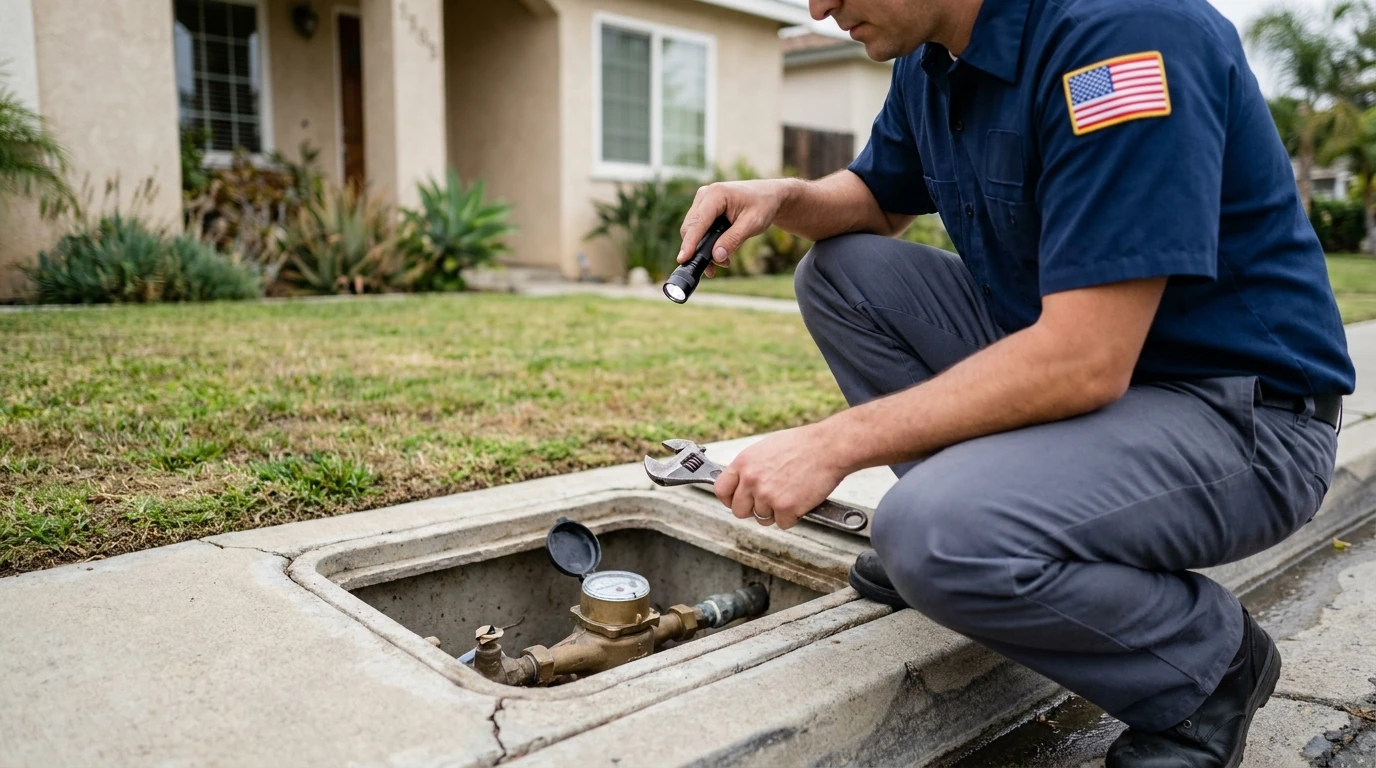
Your water meter’s smallest dial, usually a red triangle or arrow, moves any time water flows anywhere on the property. If it’s spinning with every fixture off, water is leaking somewhere between the meter and your house, or inside the house itself.
Here’s the test:
- Find your main water shut-off valve, usually where the main line enters the house near an exterior faucet. If your home doesn’t have one, have a licensed plumber install one. It’s a basic piece of safety equipment every home should have.
- Turn off every faucet and water-using appliance in the house and yard, including the washing machine, dishwasher, and ice maker.
- Locate the water meter (usually in a concrete box near the curb or property line) and find the smallest dial.
- Have someone turn on one faucet briefly so you can confirm you’re reading the right dial, then turn it back off.
- With everything off, watch the small dial for one to two minutes.
If it’s not moving, you don’t have an active leak right now. If it is moving, you have one somewhere on the property.
How do you tell if the leak is inside or outside the home?
Shutting off the main valve to the house, not just the fixtures, tells you whether the leak is inside the walls and floors or out in the yard. If the meter dial stops spinning once the house valve is closed, the leak is somewhere inside the home. If it keeps spinning, the leak is between the meter and the house, usually underground in the water main or an irrigation line.
An outdoor leak often shows up as a soggy patch of lawn that never quite dries, a section of driveway or sidewalk that stays damp, or unusually green grass in one spot during a dry summer. Check sprinkler valves and the main irrigation feed line too. A cracked irrigation valve can mimic a plumbing leak and run up your bill just as fast.
What are the simplest things to check first?
A running toilet or a slow-dripping faucet is the most common cause of a mystery leak, and it’s usually the cheapest fix. Before assuming you have a hidden pipe problem, rule out the obvious:
- Listen for a toilet that runs intermittently even when no one has flushed it. A worn flapper valve is an inexpensive part.
- Check every faucet, indoors and out, for a slow drip.
- Feel around toilets and under sinks for dampness, and check cabinet floors for swelling or a musty smell.
- Walk your floors in bare feet. A warm or damp spot, especially over a slab, can point to a hot-water-line leak underneath the concrete.
- Check ceilings below bathrooms and the laundry room for staining.
If you find the source and it’s a worn flapper or a loose supply line fitting, that’s a reasonable DIY fix for a lot of homeowners. If you don’t see where the water is coming from, or you see staining, warped flooring, or a musty smell without a visible source, stop looking and shut off the water to the house.
When is it time to call a pro instead of keep searching?
It’s time to call a licensed plumber once you’ve confirmed a leak with the meter test but can’t find or reach the source yourself, especially for suspected slab leaks. Pinpointing a leak under a concrete slab or behind a finished wall takes acoustic listening equipment or a thermal camera, not guesswork, and digging or cutting drywall in the wrong spot wastes time and money.
RT Olson Plumbing, Heating and Air Conditioning uses electronic listening equipment and infrared imaging to find leaks without tearing up the whole floor to look for them, because a misdiagnosed leak can mean cutting into the wrong room entirely. If the meter test points to a hidden leak, leak detection service is the faster and usually cheaper path to an actual fix. For the warning signs that point specifically toward a slab leak, see our guide on 7 warning signs of a slab leak.
If you already have standing water or visible damage from a leak, document it with photos before cleanup and talk to your homeowner’s insurance carrier about whether the damage is covered. Coverage depends on your specific policy, so that conversation needs to happen with your insurer directly rather than assumed. If a pipe has already failed and is actively flooding, see our guide on what to do in the first 10 minutes after a pipe bursts.
A ten-minute meter test is the fastest way to know for certain whether you have a leak and roughly where it lives. If that test points to something hidden in a wall or under the slab, request a leak detection visit at (951) 344-5596 before the leak gets a chance to cause more damage.
About RT Olson Plumbing, Heating and Air Conditioning
RT Olson Plumbing, Heating and Air Conditioning has served Corona, CA and the surrounding Inland Empire since 2014, holding California contractor license #997337 (verify any contractor’s license at cslb.ca.gov). The company offers 24/7 service and holds a 4.9-star Google rating across more than 600 reviews. This guide first ran on RT Olson’s previous website and was updated for Corona homeowners in October 2026.